Yummy Candy: A Sweet Color Font for Bold, Modern Design
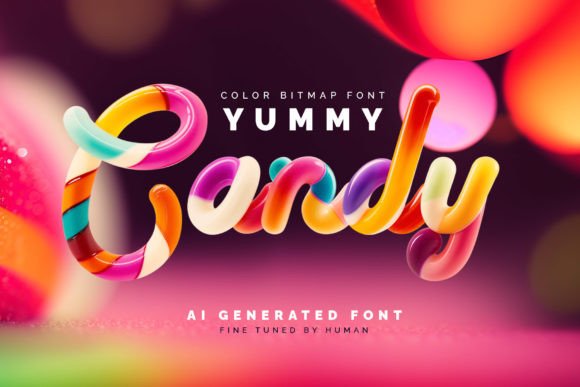
Imagine a font that doesn't just spell out words but showers them with color and texture, turning every headline into a visual treat. That's the promise of Yummy Candy, a vibrant color font born from generative AI technology. It's not your average typeface; it's a design asset built to make your projects pop with personality, whether you're crafting a social media post, designing product packaging, or building a brand identity from the ground up.
What Makes This Color Font Stand Out?
At its core, Yummy Candy is a color bitmap OpenType-SVG font. This means it functions like a standard OTF file you can install and use in compatible software, but each character is a detailed, high-resolution image with built-in color and shading. The capital letters in the OTF file boast a resolution of roughly 600 pixels in height, ensuring crisp results even at larger sizes. For projects demanding maximum detail, the included PNG files with transparent backgrounds reach an impressive 3500 pixels in height, offering incredible flexibility for large-format prints or digital assets where scaling is key.
This font is crafted specifically for the English language and includes basic punctuation. It's a creative display font, designed to be the star of the show in short bursts of text like headlines, logos, and titles rather than long paragraphs. Its visual style is unmistakably fun, textured, and full of life, making it a perfect match for projects that need to convey energy, playfulness, or a modern, trendy aesthetic.
Real-World Applications for Brands and Creators
So, where does a font like Yummy Candy actually shine? Its value lies in its ability to instantly inject visual interest and a specific mood into a design. Let's explore some practical scenarios where this typeface can solve common creative challenges.
For Branding and Logo Design: A startup targeting a young, energetic audience—perhaps a new candy shop, a mobile game, a kids' apparel line, or a trendy dessert truck—could use Yummy Candy for its primary logo or wordmark. It immediately communicates a brand personality that is playful, modern, and approachable, helping to build instant brand recognition in a crowded market.
For Packaging and Merchandise: Imagine this font on a bag of artisanal gummy bears, a sticker sheet, or a t-shirt. The textured, colorful letters add a tactile quality to the visual design, making products look more premium and appealing on the shelf or in an online store. It’s a fantastic tool for packaging design that needs to stand out.
Digital Presence and Marketing: In the fast-scrolling world of social media, grabbing attention is everything. Using Yummy Candy for Instagram story headers, YouTube thumbnails, or Facebook ad graphics can significantly boost engagement. It’s also a great choice for website hero banners, blog post titles, and email newsletter headers, where a striking display font can draw readers in. For digital product creators, it can add a unique flair to online course graphics, ebook covers, or printable planners.
Print and Editorial Projects: Don't limit it to the screen. This font can make event posters, party invitations, and magazine covers feel celebratory and dynamic. Its high-resolution PNG files are particularly useful here, allowing designers to scale the artwork for posters, banners, or even wall art without losing quality.
Practical Tips for Using a Display Font Like This
Choosing the right creative font is just the first step. Using it effectively requires a bit of strategy. Here’s some practical advice to ensure Yummy Candy works for you, not against you.
- Pairing is Key: A vibrant display font like Yummy Candy is best balanced with a simpler, more neutral companion. Pair it with a clean sans serif font for body text or a classic serif font for a touch of elegance. This creates hierarchy and ensures your design remains readable and professional. Think of Yummy Candy as the main actor and its pairing font as the supporting cast.
- Context Matters: Always consider your project's goals. Is the tone playful and informal? This font is perfect. Is it for a serious legal firm or a luxury finance brand? Probably not. Matching the typography to the message is a fundamental rule of effective visual communication.
- Test for Readability: While it's a display font, you still need to ensure it's legible at the size you intend to use it. Test it in your design software. Does it work well for a short headline? Most likely. For a subheading? Maybe. For a full sentence? Probably not. Its strength is in impactful, short-form text.
- Understand the Technology: As a color font using OpenType-SVG technology, it's supported by most modern design applications like Adobe Photoshop, Illustrator, InDesign, Procreate, and Affinity Designer. However, it's always wise to test it in your specific workflow. This technology is evolving, and awareness of its capabilities ensures a smooth creative process.
- Review Your Licensing: Before using any commercial font, always double-check the licensing terms. Ensure the license covers your intended use, whether it's for a client project, merchandise for sale, or a digital product. This is a critical step for any design asset you incorporate into your work.
Why a Font Can Transform Your Visual Strategy
Typography is a silent ambassador for your brand. The right typeface does more than just present words; it conveys emotion, establishes credibility, and creates a cohesive look across all touchpoints. A well-chosen font like Yummy Candy can improve visual consistency when used repeatedly in your marketing materials, making your brand instantly recognizable.
It enhances professional presentation by showing attention to detail and a commitment to a specific aesthetic. In a digital landscape saturated with generic templates, a unique and high-quality premium font can be a differentiator that captures your audience's attention and boosts engagement. It’s a small detail that contributes significantly to the overall perception of your brand or project.
Ultimately, Yummy Candy is more than just a collection of colorful letters. It's a tool for visual storytelling. Whether you're a small business owner crafting your first brand identity, a content creator looking to elevate your graphics, or a designer seeking fresh design assets, it offers a specific and potent visual language. By understanding its strengths and applying it thoughtfully, you can create designs that are not only beautiful but also strategically effective in communicating your message.